Friday at the club was heaving. Since our change of venue the club really has gone from strength to strength. Lots of different periods and genres of gaming are played. This week I took down my ECW collection to try something different. I took down the old Ariel Games boardgame 'The English Civil War' in order to play a campaign with the aim of generating tabletop battles.
Ade and Kev took the Parliamentarian side against Dan and Keith taking the Royalists. Keith had played the game many years ago, so maybe had a slight advantage!

Although not a great picture, here is the board after the inital moves during July and august 1642. The Parliamentarians are stronger in the south whilst the Royalists are stronger in the north. The King holds the north Midlands, but there is concern he is isolated with not many troops around him!
There was some minor skirmishing in the south of England and Fairfax for the Parliamentarians looked to move his army north towards Oxford, but was unable to find safe passage without bringing a major engagement, which would have been disadvantageous with the size of the field army he had to hand.
The Royalists did take advantage of their numbers in the West Midlands region though and attacked Waller who had managed to move north from the south west. This brought about the first field battle of the war in September 1642 outside of a village just outside of Gloucester called Churchdown.
To translate the boardgame situation to the tabletop, we simply adopted 1pt of foote or horse in the boardgame to 1 unit on the tabletop. I also gave each army a couple of guns and a unit of dragoons just to keep things interesting. Using the Regiment of Foote rules, we used the scenery set up as per the rules but didn't use the death rolls section, as the strength of each army had been already determined in the boardgame.
As the Royalist army under the command of Prince Rupert had attacked, they were the attackers in the tabletop game. They deployed on the outskirts of Churchdown, facing open moorland with some enclosures and rising ground upon which the Parliamentarian army deployed under the command of William Waller
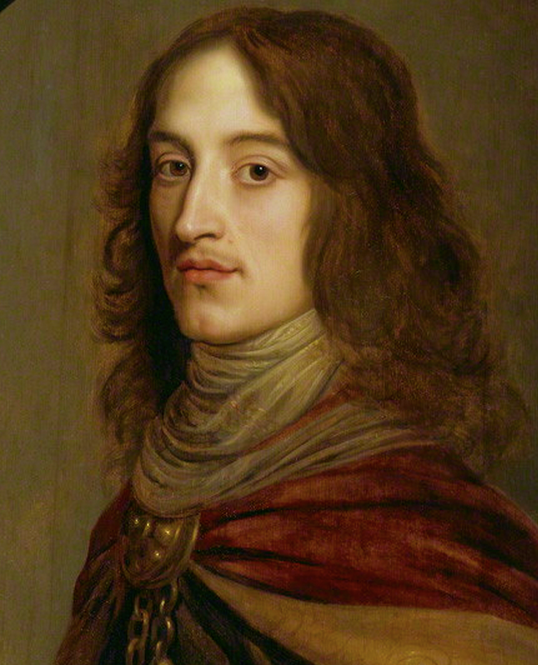
Rupert was a nephew of Charles I and commanded the Royalist cavalry during the English Civil War.
Rupert was born on 17 December 1619 in Prague. His full title was count palatine of the Rhine, duke of Bavaria but he was known as Prince Rupert of the Rhine. His father, the elector palatine, was briefly ruler of Bohemia, but in 1620 was forced to flee to the Netherlands, where Rupert spent his childhood. His mother was Charles I's sister Elizabeth. Rupert became a soldier and fought in the Thirty Years War (1618 - 1648). This gave him useful military experience when, in 1642, he joined Charles I's army in the English Civil War.
He was soon appointed to lead the royalist cavalry and fought in the first major battle of the war at Edgehill in October 1642. His cavalry charge completely routed the parliamentarians but he got carried away and pursued them too far from the battlefield, losing the chance to inflict a decisive defeat. Other military successes gave him a formidable reputation although his relationships with other Royalists commanders were poor. They thought him arrogant and he was impatient with what he saw as their lack of professionalism.
In 1644, Rupert led the spectacular relief of the siege of York but then in July, he was defeated by a parliamentary army at Marston Moor, losing York and the north of England for the royalists. In June 1645, he took part in the Battle of Naseby at which the royalists were defeated. Rupert now advised Charles to seek a treaty with parliament, but the king believed he could still win. In September, Rupert surrendered Bristol to parliament. In response the king abruptly withdrew his commission. Rupert left for exile in Holland.
In 1648, part of the English navy mutinied and sailed for Holland where, in January 1649, the Prince of Wales gave Rupert command. The naval campaign took Rupert's ships to Kinsale, then to Lisbon and in November 1650 to defeat by Commonwealth admiral Robert Blake off Carthagena in south east Spain. Rupert escaped and spent the next decade in the West Indies and then in Germany.
After the restoration of the monarchy in 1660, Rupert held a series of British naval commands, fighting in the Second and Third Anglo-Dutch Wars. He died on 19 November 1682.
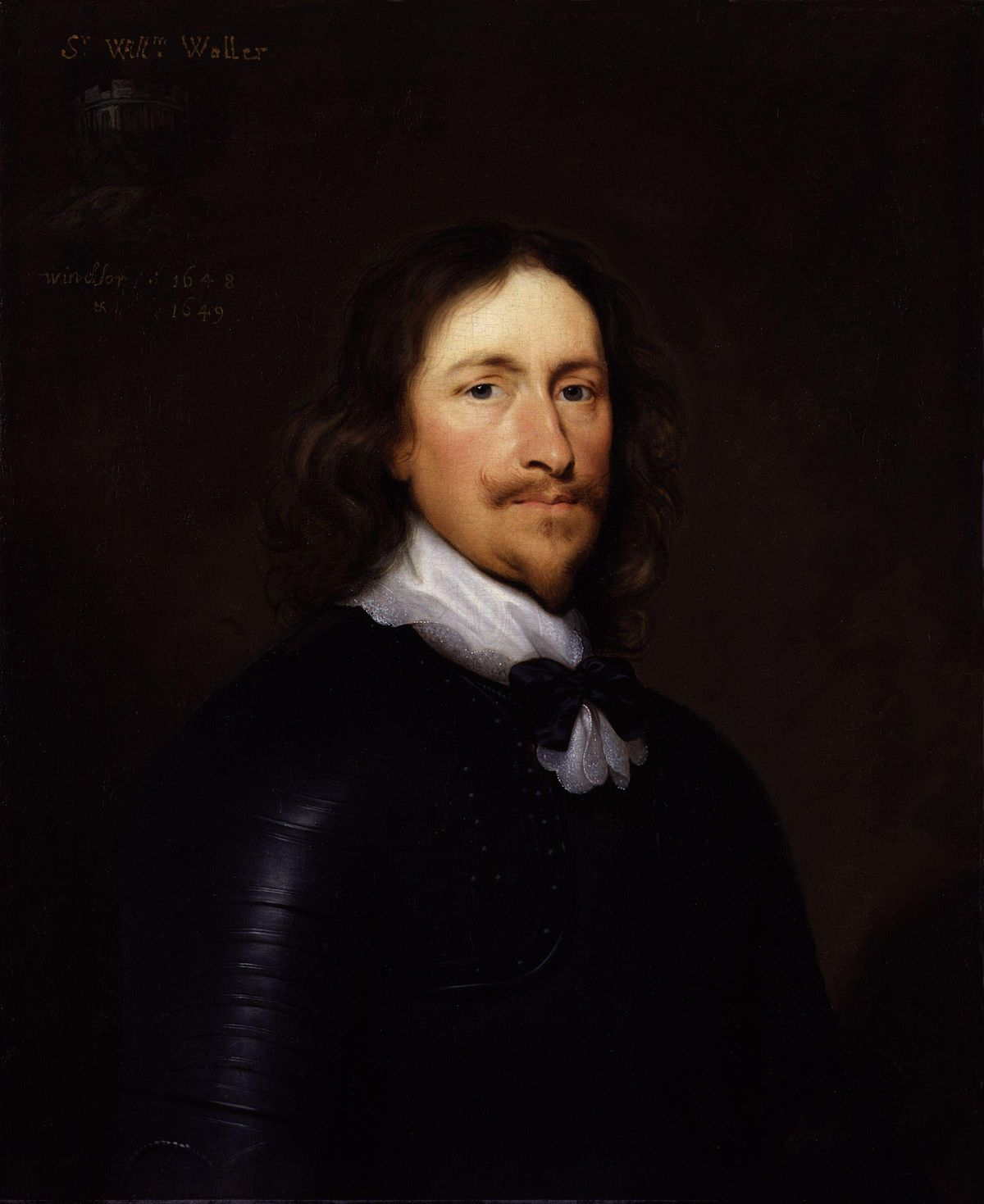
Waller fought for Bohemia in the early campaigns of the 30 Years War (1618–48) and was knighted in 1622. Elected to the Long Parliament in 1640, he became a colonel in the Parliamentary army upon the outbreak of the Civil War. In September 1642 he captured Portsmouth and, soon after, several other towns of southeastern England, thereby earning the nickname “William the Conqueror.” Promoted to the rank of General, he seized Hereford, Herefordshire, in April 1643. Nevertheless, on July 13 Ralph Hopton severely defeated him at Roundway Down, Wiltshire. Waller prevented the Royalists from invading Sussex in January 1644 and stopped Hopton’s advance on London in March, but he was defeated by King Charles I near Banbury, Oxfordshire, in June. The setbacks suffered by Waller and other talented commanders led to demands for a reorganization of the Parliamentarian forces. Waller was evidently the first to suggest the creation of a professional army. This New Model Army was formed in February 1645, and two months later Waller resigned his commission. Waller was a leader of the Presbyterians in Parliament during their unsuccessful struggle (1645–48) with the army, which was dominated by Independents (radical Puritans). For opposing Cromwell's Commonwealth regime, he was imprisoned several times between 1649 and 1659. Although elected to the Convention Parliament of 1660, Waller never took his seat and subsequently received no political encouragement from King Charles II.


A general shot of the battlefield, to be continued next week. Churchdown can be seen in the middle right. Sir Algernon Smythe MP, commander of the Royalist right has managed to swing his foote around to assault the extreme Parliamentarian right across the enclosures.
As this is a campaign game, the generals may decide to withdraw from the field to preserve their army. However there will be a risk in doing this (rules undecided as of yet!). Friday night will see the conclusion of the fight and hopefully some more manouvering, ready to set up the next battle.
More soon!


